
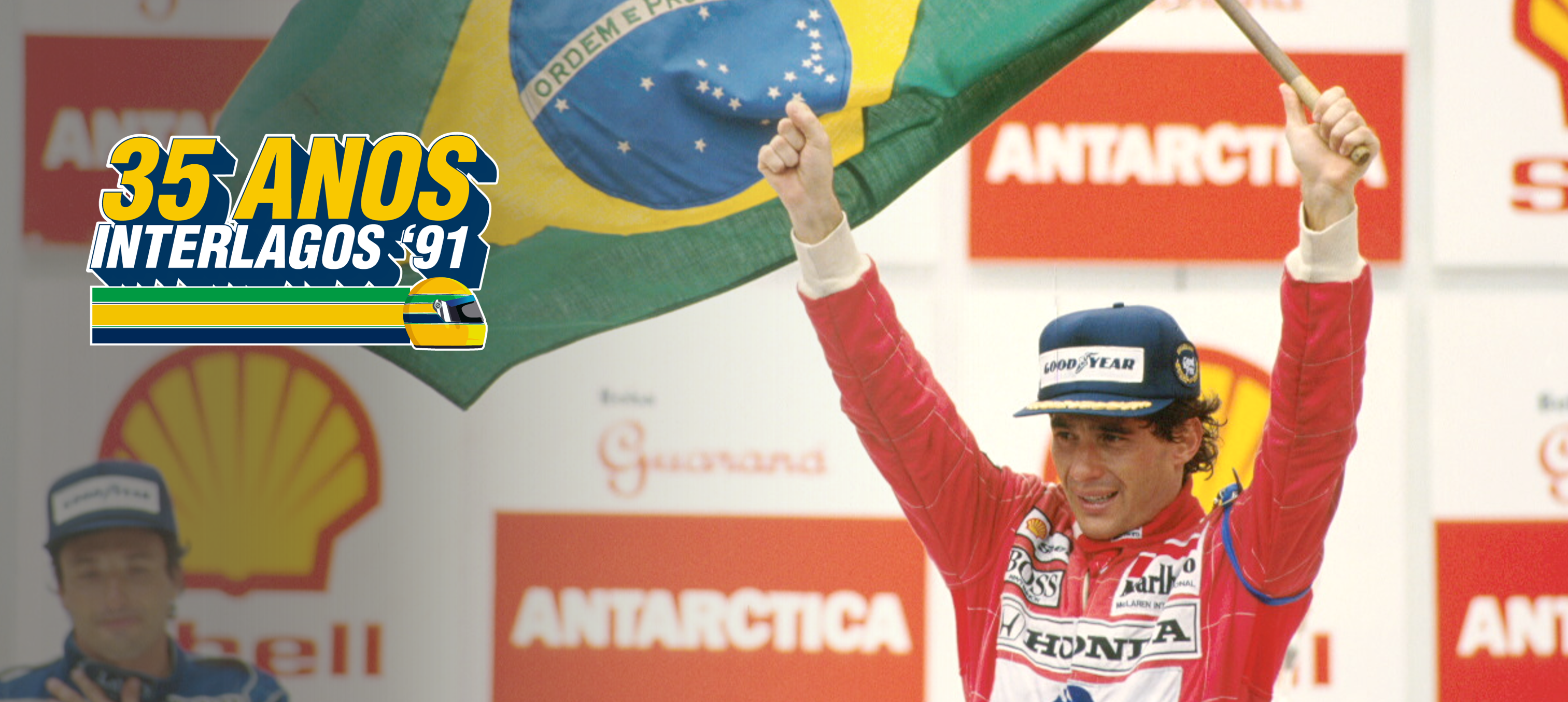
If there is one race where all of Ayrton Senna’s skills and virtues were put to the ultimate test, it was the 1991 Brazilian Grand Prix — an epic event that celebrates its 35th anniversary this Tuesday, March 24.
With Interlagos packed to the brim, Brazilian fans eagerly awaited the moment when the McLaren driver would finally break the curse of never having won at home.
Senna had come close several times, like in 1986 in Rio de Janeiro, when he finished second. But the most heartbreaking near-miss was in 1990, when São Paulo once again hosted the Brazilian GP — with Senna even contributing to the design of the iconic “S do Senna” section of the track.
That year, the Brazilian started from pole and led the race, but his McLaren’s front wing was damaged by backmarker Satoru Nakajima, forcing an extra pit stop and relegating him to third place.
The story of the race
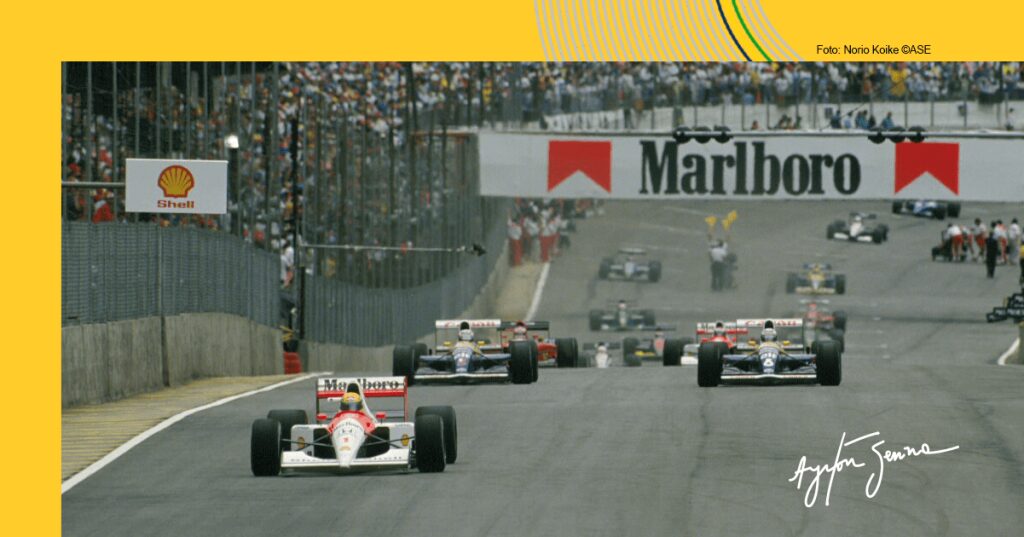
In 1991, history seemed set for a very different script. Senna claimed yet another pole at home— his fifth out of six in Brazil — and got off to a strong start, building a comfortable lead over the Williams cars of Riccardo Patrese and Nigel Mansell.
With 12 laps to go, Mansell spun out and retired due to gearbox issues. Senna now had to manage a 40-second advantage over Patrese — a task that, on paper, seemed straightforward for the reigning world champion. Yet it became an unforgettable display of grit, resilience, and the talent required to push the McLaren MP4/6 to its limits.
Senna faced gearbox problems throughout the race. He lost fourth gear with 20 laps remaining, and over the following laps gradually lost fifth and third, leaving only sixth gear with seven laps to go.
The physical effort needed to control the car was immense. Senna had to keep the Honda engine at high revs to navigate low-speed corners, adapting constantly to the car’s limitations while confronting extraordinary adversity.
With two laps to go, his lead over the Williams shrank to just four seconds — and just when it seemed impossible to hold on, a helping hand fell from the sky: Interlagos’ classic rain. Initially light, it was enough to wet the track.
“I thought I wasn’t going to win in the last two laps with the gearbox problem over the last seven laps. I said, ‘if it happens, it’ll be at the last second.’ I thought to myself, ‘I’ve fought so hard these years to get here and today I fought so much. It has to happen, it has to happen,’” Senna said after the race.
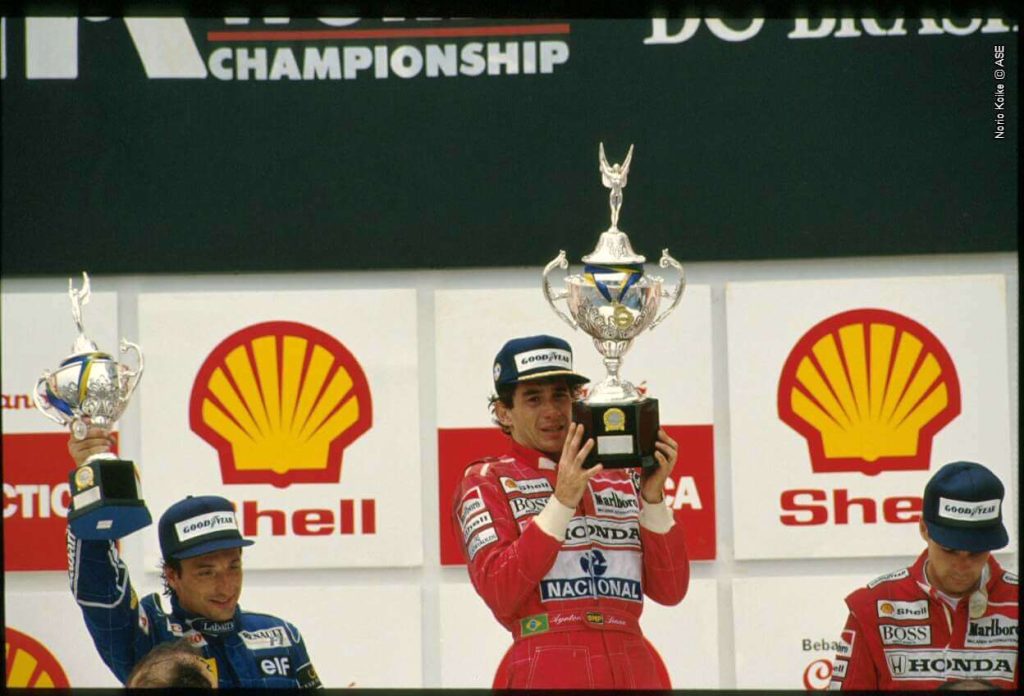
It was in that drizzle that Ayrton held off Patrese’s Williams and crossed the finish line less than three seconds ahead, falling into the arms of the Brazilian crowd. The physical strain was so intense that Senna experienced muscle spasms and struggled even to lift the winner’s trophy — a heroic scene from one of his greatest career achievements.
A victory that inspires generations
Thirty-five years later, Senna’s triumph at Interlagos remains one of the most iconic symbols of his essence. Values like determination, perseverance, and resilience continue to guide the actions that carry his name.
“This victory represents who Ayrton always was: someone who never gave up, even under the toughest conditions. It’s precisely this essence that we aim to preserve and carry forward every day through the Senna and Senninha brands, turning this legacy into everyday inspiration for people to surpass their own limits,” says Ana Simões, Marketing Director at Senna Brands.
The anniversary of Senna’s first home victory will also be celebrated on May 1 during the Ayrton Senna Racing Day, a street race at Interlagos for 11,000 participants. The event invites Brazilian fans to run together in tribute to the idol — echoing the devotion of thousands of fans who came together 35 years ago at the same track.